
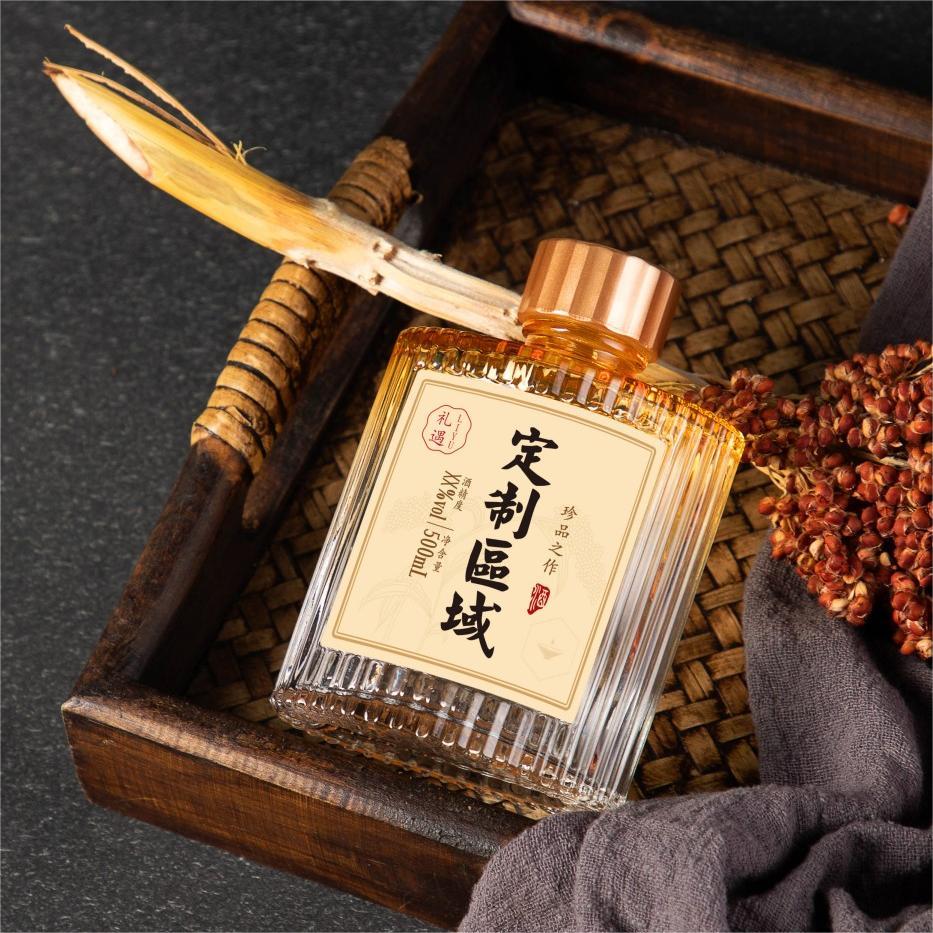
Liquor bottle size affects more than the amount of spirit in the package. It influences shelf presence, pricing, sampling, gift-box design, case count, filling-line setup, freight, and the rules of the destination market.
Choose the format by working backward from where the product will be sold and how customers will use it. Then confirm that the selected bottle is compatible with the spirit, closure, decoration, filling operation, and secondary packaging.
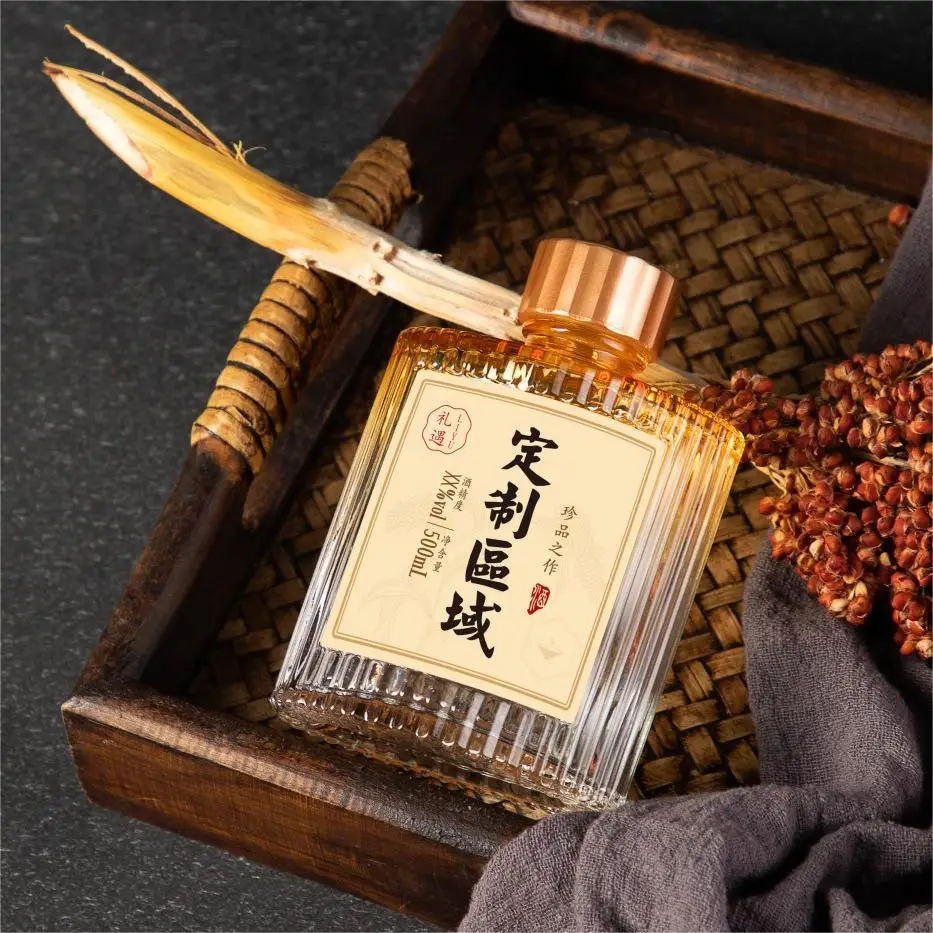
What Are Common Liquor Bottle Size Categories?
| Format group | Typical brand use | Packaging considerations |
|---|---|---|
| Mini and sample formats | Tastings, discovery sets, الهدايا, travel retail, trial launches | Small labels, closure handling, high unit count per carton |
| Mid-size formats | Premium trials, gift pairs, hospitality, limited releases | Price positioning, carton layout, market availability |
| Standard retail formats | Core whiskey, gin, rum, vodka, tequila, baijiu, and liqueur products | Retail shelf fit, filling line, familiar customer expectations |
| Large formats | Hospitality, sharing, display, special editions | Weight, grip, pouring, carton strength, freight, shelf space |
Names such as “mini,” “half bottle,” “fifth,” or “handle” vary by market and trade usage. Use milliliters or liters in technical specifications and contracts.
Check the Destination Market Before Selecting Capacity
Permitted formats can change, and one market’s common size may not be accepted in another. For the United States, the Alcohol and Tobacco Tax and Trade Bureau lists the authorized standards of fill for distilled spirits, including multiple formats from 50 mL through 3.75 L.
Review the current TTB distilled spirits net contents guidance before selecting a bottle for the U.S. Other markets have their own rules, labeling practices, and common retail formats.
When one brand serves several regions, it may need more than one capacity or label version. Decide this early because capacity can affect mold design, artwork, case packing, approvals, and inventory.
When Should a Brand Use Mini Bottles?
Mini formats can introduce a new spirit at a lower trial commitment, create tasting flights, support gift assortments, or allow several expressions to be packaged together.
Small bottles require careful design because the available label or print area is limited. Prioritize the brand mark and required product information, then verify legibility on the physical sample. The closure also needs to be easy to apply and open at the smaller scale.
ال G12 mini glass alcohol bottle provides a visual reference for compact spirits packaging. Its stated capacity should be evaluated against the rules of the intended market before a filled product is planned.
How Do Standard Retail Sizes Support a Core Product?
Standard retail formats are familiar to bottlers, distributors, retailers, and customers. They can simplify shelf planning and make it easier to compare price and value within a category.
Capacity alone does not determine the external bottle dimensions. Two bottles with the same fill volume can have different height, width, weight, shoulder shape, and base thickness. Confirm the exact drawing before planning the filling line, label, gift box, or export carton.
When Is a 700 mL or 750 mL Bottle Appropriate?
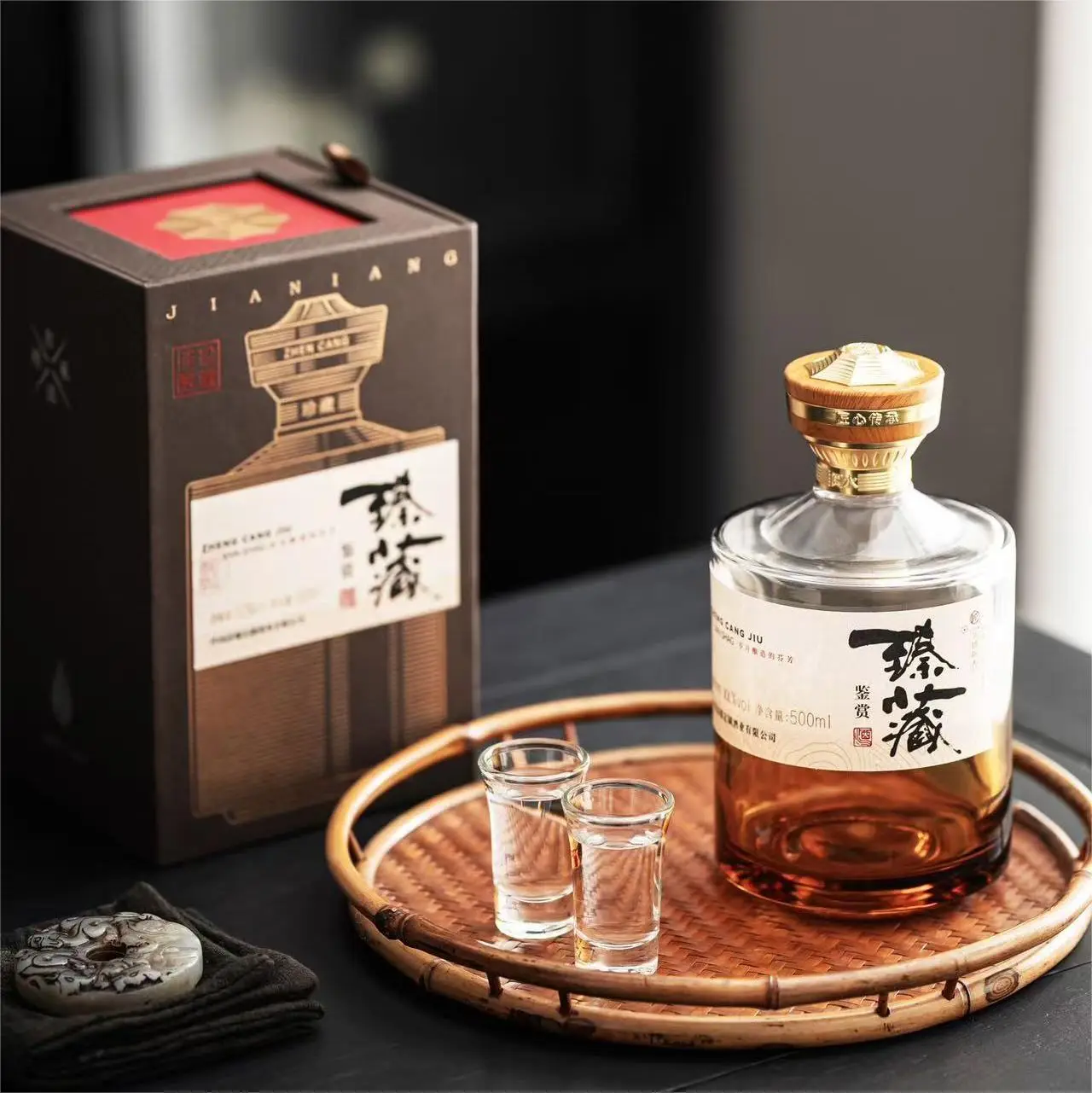
Both 700 mL and 750 mL formats appear in international spirits markets, but their prevalence and acceptance vary. A brand planning exports should confirm the destination rules and distributor expectations before committing to a mold or purchasing a large bottle inventory.
If the same visual identity will be used in several capacities, ask whether the bottle family can preserve consistent shoulders, bases, decoration panels, closures, and proportions.
How Does Bottle Size Affect Decoration?
A larger body can provide more room for labels, direct printing, embossing, and storytelling. A smaller format requires a stronger hierarchy because every element competes for limited space.
For each size, prepare artwork at the real print dimensions. Confirm minimum text size, line width, barcode performance, regulatory information, and the relationship between front, خلف, and neck decoration.
Review custom glass bottle shapes before finalizing the artwork area. Bottle geometry should lead the design, not be treated as a flat rectangle.
How Does Size Affect Packaging and Freight?
External dimensions and bottle weight influence units per case, divider spacing, pallet efficiency, handling, and transport cost. Large or heavy bottles can increase packaging material and freight, while very small bottles increase the number of individual components and packing operations.
Compare the complete shipped package, not only the unit bottle:
- Bottle and closure weight
- Gift box and insert
- Units per export carton
- Cartons per pallet
- Pallet height and stability
- Protection required for the distribution route
Use This Bottle Size Brief
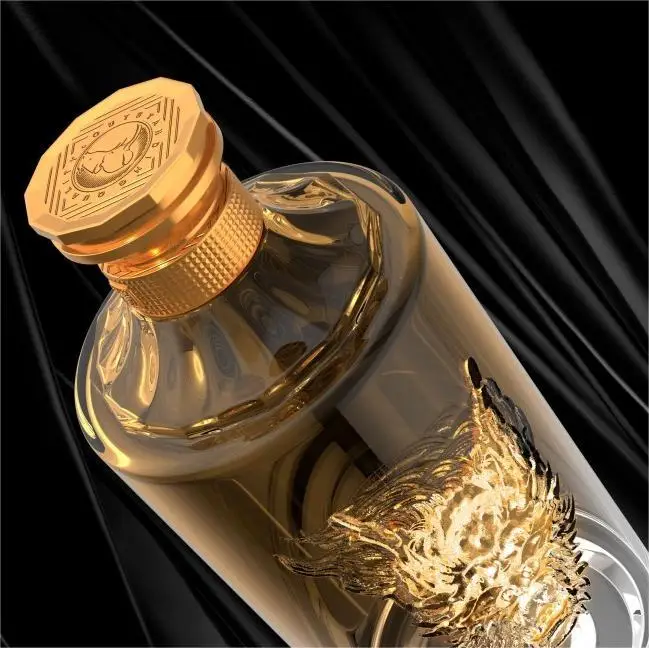
Provide the following information when requesting bottle options:
- Spirit type
- Destination countries
- Required nominal capacity
- Maximum bottle dimensions
- Glass or ceramic preference
- Closure direction
- Decoration and label requirements
- Filling-line constraints
- Gift box and case-packing plan
Shang Art can compare existing formats and discuss a coordinated custom liquor bottle, closure, Logo, and secondary package. To request suitable bottle models or samples, contact Shang Art at market@shang-art.com or WhatsApp +86 13939051903.
Capacity rules can change. ال TTB’s 2025 standards-of-fill update documents additional U.S. container sizes for distilled spirits and shows why brands should verify the current rule before approving a format.
Frequently Asked Questions
Can the same bottle shape be produced in several capacities?
A bottle family can be developed in several capacities, but each format needs its own dimensional, mold, filling, decoration, closure, and packaging review.
Is the nominal capacity the same as the bottle’s total capacity?
Not necessarily. Technical approval should distinguish the intended fill volume from the container’s brimful or total capacity and define the required fill level.
Should a brand choose capacity before bottle shape?
Capacity and destination rules should be defined first, then the bottle shape can be selected within those functional limits.