
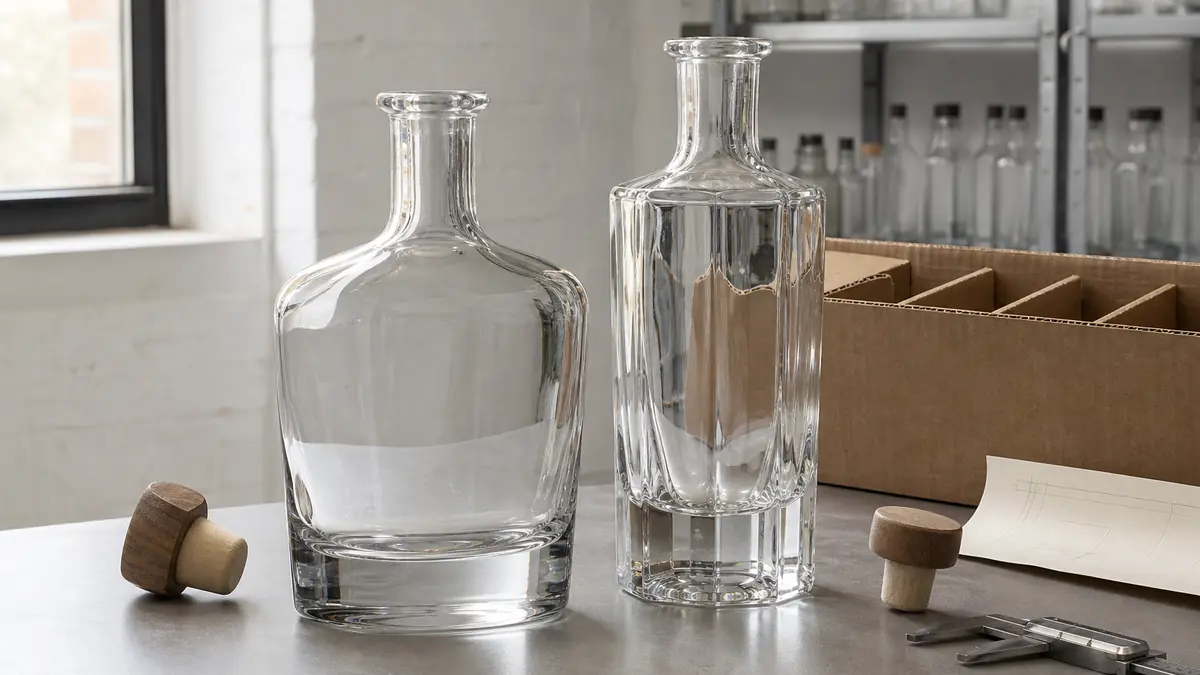
Liquor decanter bottles are best treated as complete packaging systems, not simply decorative glass shapes. A broad shoulder may create presence but reduce label area. A thick base may change perceived weight but also increases case weight. A large stopper may support the design while demanding closer control of the neck finish, insertion, and protective insert. The right choice is the bottle that preserves the intended visual character after filling, closing, decorating, التعبئة, والشحن.
This guide compares the decisions that matter when a spirits brand wants a decanter-style retail bottle. It focuses on empty packaging intended for a bottling project. A tabletop serving decanter and a sealed bottle sold with spirits can look similar, but they do not have the same technical, regulatory, or distribution responsibilities.
What Is a Liquor Decanter Bottle?
A traditional decanter is a decorative vessel with a stopper used for serving wine or spirits. In commercial packaging, “decanter bottle” usually describes a bottle with some of that visual language: a substantial base, sculpted shoulders, faceted walls, a distinctive stopper, or a presentation-led silhouette.
The important distinction is use. A retail bottle must hold the declared fill volume, accept the chosen closure, move through the filling and decorating processes, carry required information, fit its gift box or shipping case, and arrive without leakage or damage. A shape that works on a home bar is not automatically ready for a production line.
Quick Comparison: Which Decanter Direction Fits the Project?
| Design direction | Potential advantage | Main constraint to verify | Best sample question |
|---|---|---|---|
| Wide, low body | Strong frontal presence and a stable-looking silhouette | Carton footprint, label curvature, and line spacing | Does the filled bottle fit the intended case and retail shelf? |
| Tall, narrow body | Efficient vertical display and a larger upright decoration zone | Overall height, tipping, تخليص الإغلاق, and case height | Can the line, capper, علبة هدية, and shipper accept the maximum height? |
| Faceted glass | Light-catching structure and tactile differentiation | Decoration registration, panel consistency, and insert contact points | Which surfaces are controlled enough for the real artwork? |
| Smooth round glass | Flexible viewing angles and conventional handling | Wrap alignment and orientation for a front-facing graphic | How will the bottle be oriented for decoration and case packing? |
| Ceramic or porcelain | Opaque color, الصقيل, اِرتِياح, and a different hand feel | Glaze and decoration testing, weight variation, and line handling | Which food-contact and market-specific checks apply to the final decorated sample? |
Shape Changes More Than Shelf Appearance
Start by recording maximum height, عرض, عمق, body diameter, base contact area, shoulder profile, neck height, and closure height. Maximum dimensions matter because a sculpted corner, ميدالية, ridge, or stopper can define the real packing envelope even when the main body is smaller.
A wide decanter-style bottle can create a generous front panel, but deeply curved shoulders may reduce the usable label or print zone. A tall bottle can offer a clean vertical area, yet the combined bottle-and-closure height may conflict with a gift box, case, shelf, filling head, or closure applicator. Facets can become part of the artwork, although the decorator needs a repeatable orientation point and enough surface consistency for the selected process.
If you are deciding between basic footprints before adding decanter details, the comparison of square and round glass bottle shapes provides a useful starting point. Once a direction is selected, evaluate it as a filled physical sample rather than relying only on a rendering.
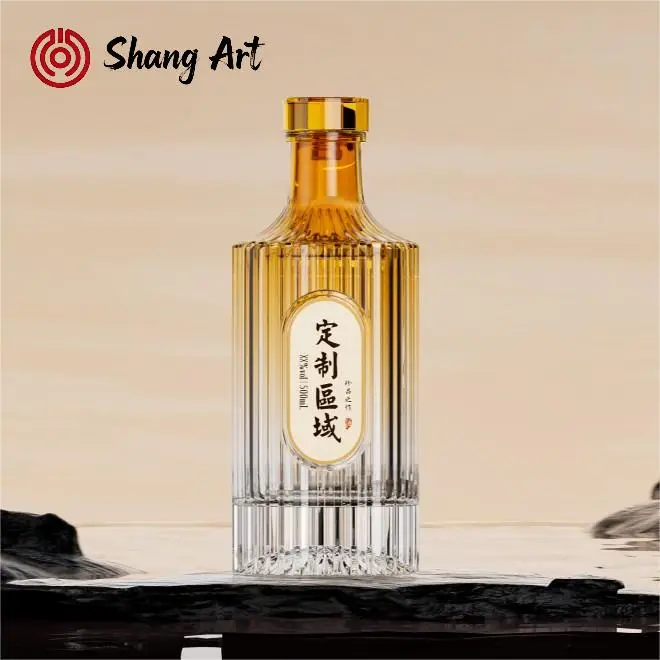
Weight Is a Packaging Input, Not a Quality Score
Heavy glass is often associated with decanter styling, but weight should be specified and evaluated rather than used as a shortcut for quality. Two bottles with the same nominal capacity can have different glass distribution, base thickness, مركز الثقل, and maximum dimensions. Those differences influence handling, case gross weight, pallet planning, insert strength, and the effort required to pour from the filled bottle.
Record the empty-bottle weight and its agreed tolerance, then calculate the approximate filled unit and case weights using the actual product and pack count. Ask the contract filler, warehouse, freight partner, and retail team whether their limits apply to the bottle, the finished unit, the inner gift box, or the shipping case. Do not compare bottles using only a catalog weight if the final closure and secondary package have not been included.
A more efficient design is not necessarily the lightest option. The useful target is the amount and distribution of material that supports the design and required performance without adding weight that has no defined purpose. Approve the real bottle and pack together.
The Closure Must Match the Neck and the Filling Process
A large wood, معدن, glass-look, or ceramic-look top can make a decanter bottle recognizable, but the visible top is only one part of the closure assembly. For a bartop stopper, the inserted shank, sealing element, neck bore, finish dimensions, insertion depth, extraction force, and recovery behavior all need to be compatible. For a threaded closure, finish geometry, thread engagement, liner, application torque, and tamper-evident direction may matter.
Ask whether the closure will be applied by hand, semi-automatically, or on an automated line. Confirm available headspace above the finish, bottle orientation, gripping area, and any height restrictions. A closure that looks correct in a static sample may still require a different applicator setup or protective clearance in the case.

Review the main bottle cap and stopper directions while the bottle geometry is still flexible. Final acceptance should use production-representative bottles, closures, filling conditions, and the intended opening experience.
Glass and Ceramic Decanter Bottles Need Different Controls
Glass supports transparency, internal embossing effects, colored glass, طلاء, frosting, printing, and faceted mold geometry. The buyer can inspect the liquid and fill level, but visible glass distribution, طبقات, base structure, and decoration alignment become part of the presentation. ال glass alcohol bottle range shows different starting forms that can be considered before a new mold is justified.
Ceramic and porcelain bottles provide opacity, glaze color, اِرتِياح, sculptural surfaces, and a distinct tactile character. Their approval plan should address the final glaze and decoration system, dimensional variation, وزن, neck interface, and the food-contact requirements of each destination market. Review ceramic alcohol bottle options for material-specific design directions, but do not assume that a finish or test result transfers unchanged from one decoration system to another.
Decoration Needs a Controlled Surface and Orientation
Decanter geometry can create excellent decoration opportunities: a recessed cartouche, a flat central panel, a shoulder emblem, vertical fluting, or a clear view through a thick base. It can also create registration problems. Before artwork is finalized, ask the decorator to mark the usable print, ملصق, foil, النقش, or coating area on the physical sample.
Check the filled bottle under front, جانب, shelf, and backlight conditions. Clear glass and deep facets may distort small lettering. A wrap label may bridge a change in curvature. A front label may need a repeatable orientation feature. Coating or frosting can change surface energy and label adhesion. The decoration plan should therefore be reviewed with the real bottle, surface treatment, and application process.
Capacity and Label Space Must Be Confirmed for the Destination
A dramatic bottle outline does not override market rules. Confirm the required nominal capacity, fill point, مساحة الرأس, mandatory statements, legibility, and placement for every destination before approving molds and artwork. For the United States, the current TTB net-contents guidance lists authorized distilled-spirits container sizes and explains how net contents may be presented. Other countries can use different rules and review paths.
Leave a practical information zone even if the bottle uses direct printing or a small front emblem. The brand panel, mandatory information, codes, importer details, and production marks need a coordinated hierarchy. Obtain regulatory review for the actual market and final artwork rather than copying another package.
Protect the Stopper, Shoulder, and Base as One Packed Unit
Decanter-style bottles often concentrate value and vulnerability in the stopper, shoulder edge, decorated panel, or heavy base. The gift box can present the bottle, but presentation packaging is not automatically a shipping system. The transport pack must control movement, separate adjacent bottles, protect finishes, and manage the total unit and case weight.
Design the insert from the bottle’s maximum dimensions and verified contact points. Avoid allowing a delicate stopper or decorated edge to carry stacking load. If the bottle has an irregular silhouette, test whether the insert holds it consistently after repeated handling. ال نظرة عامة على إجراء ISTA 3A explains the parcel-distribution hazards included in that procedure and recommends additional samples for fragile or liquid packaged products. Select the test method with the packaging laboratory for the real distribution route; citing a procedure is not the same as passing it.
What Should Be Approved Before Production?
- Geometry: maximum dimensions, سعة, fill point, الاتصال الأساسي, decoration panels, and closure height.
- وزن: empty bottle, إنهاء, finished unit, علبة هدية, shipping case, and agreed tolerances.
- إنهاء: neck finish, sealing component, application method, extraction, أدلة التلاعب, and leakage checks.
- زخرفة: real artwork, colors, تسجيل, adhesion, كشط, and appearance on the filled bottle.
- Line fit: conveyor stability, guides, filling head, closure equipment, inspection, and packing method.
- امتثال: destination-market capacity, food-contact, ملصق, code, and importer requirements.
- Distribution: insert contact points, carton layout, case weight, pallet plan, and route-appropriate tests.
How to Brief a Liquor Decanter Bottle Project
Send the spirit type, أسواق الوجهة, nominal capacity, الكمية المقدرة, preferred material, shape references, target dimensions, closure direction, عمل فني, زخرفة, موقع التعبئة, gift-box concept, case count, and shipping route. Include constraints from the bottler and retailer before the silhouette is locked.
شانغ آرت custom alcohol bottle development process can be used to compare an existing bottle route with a new design, coordinate logo application and caps, and define the next sample stage. To request suitable glass or ceramic starting options, a sample plan, or a project quotation, اتصل بـShang Art with the completed brief.
الأسئلة المتداولة
Is a liquor decanter bottle the same as a serving decanter?
Not necessarily. A serving decanter is used to present and pour a beverage. A retail liquor bottle must also meet filling, ختم, وضع العلامات, التعبئة, and destination-market requirements. Define the intended use before selecting the bottle and closure.
Does heavier glass make a decanter bottle better?
No single weight proves quality. Evaluate glass distribution, stability, usability, case weight, protection, and the desired brand impression together. The approved specification should state a useful weight target and tolerance rather than assuming that more glass is always better.
Can a glass-style stopper be used for commercial shipping?
It may be possible, but the visible top and sealing component must be evaluated as an assembly. Confirm neck compatibility, طلب, extraction, leakage performance, tamper-evident needs, and protective clearance with production-representative samples.
Should the gift box be tested with the bottle?
نعم. Test the finished bottle, إنهاء, زخرفة, إدراج, علبة هدية, and shipping case as the unit that will travel. A presentation box alone may not control movement or protect the package during distribution.