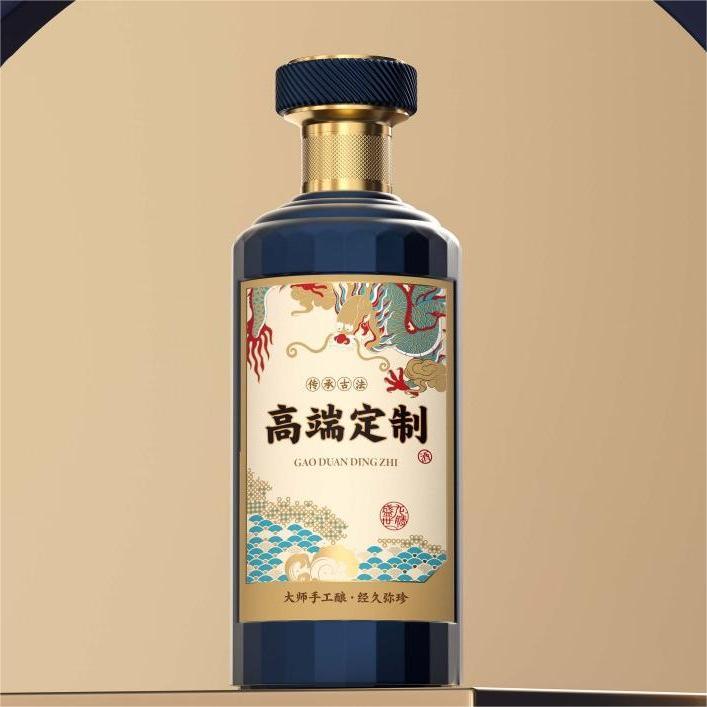
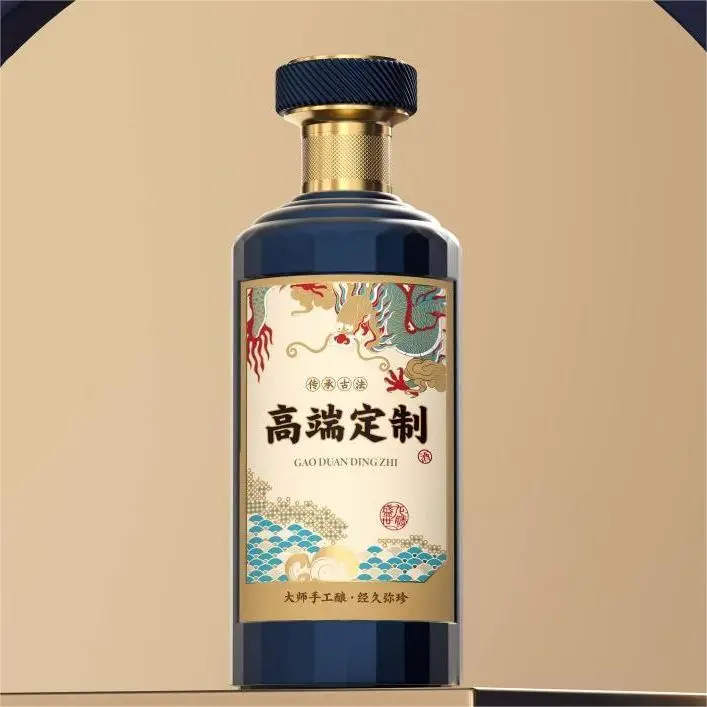
A custom ceramic liquor bottle can turn packaging into a lasting part of the brand experience. Its opaque body, vidriado, tactile surface, and sculptural possibilities can support whiskey, baijiu, tequila, rum, liqueur, and limited-edition spirits.
The strongest projects coordinate bottle shape, cuerpo cerámico, vidriado, obra de arte, cierre, requisitos de contacto con alimentos, and protective packaging from the first design discussion.
Why Do Spirits Brands Choose Ceramic Bottles?
Ceramic provides a different visual and tactile language from transparent glass. It can support matte or glossy glazes, crackle effects, hand-inspired artwork, relief patterns, molded symbols, and shapes influenced by cultural or architectural references.
The opaque body also conceals the liquid and creates a broad surface for storytelling. This can be useful for premium expressions, commemorative releases, regional identity, gift sets, and bottles designed to remain on display after use.
Review the existing ceramic porcelain bottle collection to identify shapes, proportions, and finishes that fit the intended brand position.
1. Define the Bottle Shape and Handling
Begin with the customer experience and the filling operation. A tall, narrow bottle creates a different shelf presence from a flat-bodied, rounded, or sculptural design. The handle, agarre, balance, derramar, base stability, and available label or artwork areas all need attention.
Confirm:
- Nominal fill capacity and target market
- Maximum height, width, and case dimensions
- Center of gravity and base stability
- Neck finish and closure direction
- Artwork panels, relief areas, and orientation
- Filling-line and packing-line handling
A stock ceramic bottle with custom artwork can reduce development work. A proprietary shape offers greater distinction but requires mold development, muestreo, and a more detailed approval process.
2. Choose the Ceramic Surface and Glaze
The glaze determines color, sheen, texture, and much of the customer’s tactile impression. Common directions include smooth glossy finishes, soft matte surfaces, crackle effects, two-tone glazing, exposed ceramic details, and layered decorative areas.
Color and surface variation should be discussed before sampling. Ceramic firing can produce a natural range rather than the absolute visual uniformity of a digital screen. Define the acceptable appearance with approved physical references, not only a monitor image.
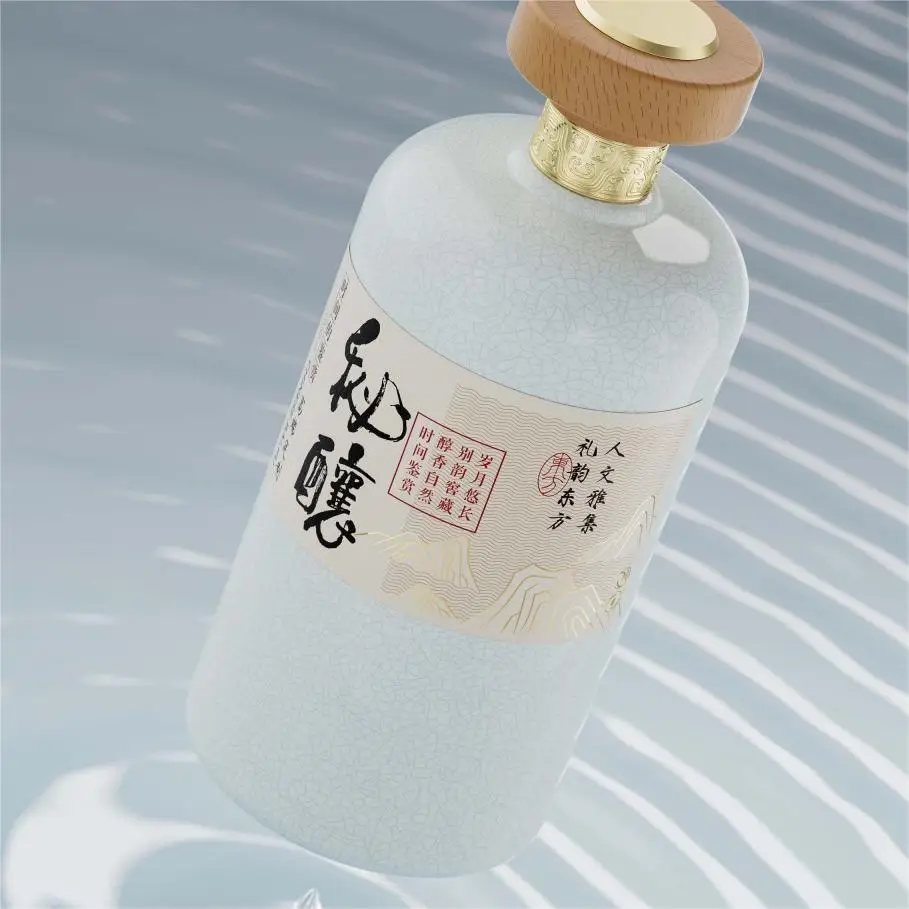
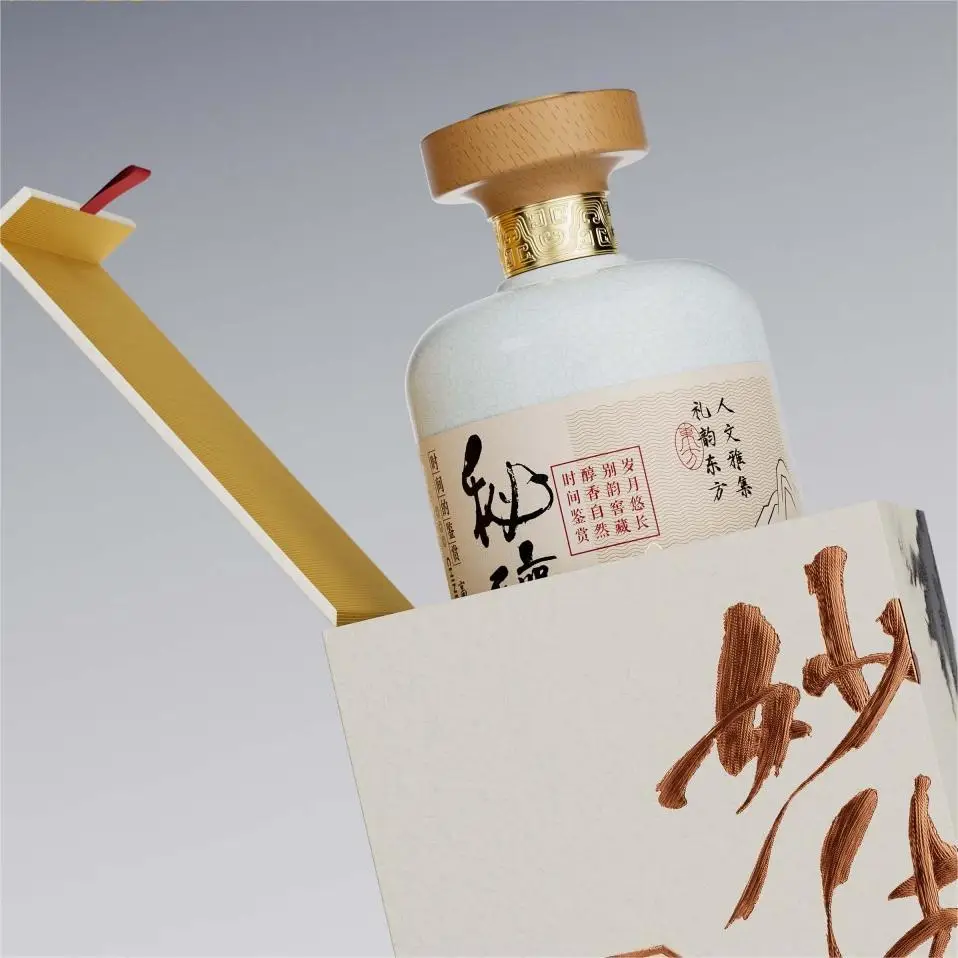
El S28 Miao ceramic bottle demonstrates how a crackle-style surface, bottle shape, and contrasting cap can create a collectible presentation.
3. Build the Artwork Into the Bottle
Ceramic decoration may include printed graphics, calcomanías, hand-inspired painting, metallic accents, relief, grabado, molded marks, or combinations of these methods.
Decide which elements are permanent parts of the container and which belong on a market-specific label. A molded brand mark can strengthen recognition, while a separate label may make regulatory text and regional versions easier to manage.
For every decoration, define:
- Artwork size and position
- Color references
- Gloss, mate, metallic, or textured areas
- Alignment with the bottle front and closure
- Acceptable variation and inspection criteria
- Resistance required during packing and use
4. Treat Food-Contact Safety as a Design Requirement
A ceramic liquor bottle is intended to hold a beverage, so the ceramic body, superficie interna, vidriado, decoración, and production controls must be suitable for that use and destination market.
The U.S. Food and Drug Administration notes that ceramicware capable of retaining liquid must meet applicable guidance for lead and cadmium, and it explains why glaze formulation and firing matter. Buyers serving the U.S. should review the FDA’s information on lead-glazed pottery and food use with qualified compliance professionals.
Ask for current test reports and documents that apply to the actual bottle, vidriado, decoración, and intended market. Do not rely on a general statement that every ceramic product is automatically suitable for every country.
5. Coordinate the Closure With the Ceramic Neck
The closure may use a synthetic stopper, ceramic top, wood-effect top, metal detail, or another component. The functional seal and visible cap can be separate pieces, but they have to remain secure and aligned.
Check neck dimensions, sealing surface, insertion or application force, extraction force, cap alignment, tamper evidence, and compatibility with the filling line. Include the closure in leak checks, transport trials, and gift-box fit reviews.
Shang Art's bottle cap guide provides a starting point for comparing plastic, metal, wood, and ceramic cap directions.
6. Protect the Bottle With the Right Gift Box and Carton
Ceramic bottles can be heavier and may include raised or projecting decorative details. The gift box insert and shipping carton should support the strongest areas of the bottle without rubbing the glaze, obra de arte, tapa, or relief.
Review:
- Clearance around the cap and decorative details
- Insert contact points
- Movement inside the individual box
- Dividers inside the export carton
- Carton stacking and pallet stability
- Performance after agreed transport testing
7. Approve a Complete Physical Sample
A rendering can show shape and artwork placement, but it cannot fully represent glaze depth, tactile texture, weight, cap fit, or variation after firing. Approve a physical sample that reflects the intended bottle, vidriado, decoración, cierre, y caja.
Record the approved sample, drawings, color references, capacidad, weight, neck finish, cierre, artwork files, and packaging specification. These become the reference points for production and final inspection.
Start a Custom Ceramic Liquor Bottle Project
Shang Art supports ceramic bottle selection and custom development for spirits brands. El custom liquor bottle process can include bottle design, Logo application, cap selection, muestreo, gift packaging, and production coordination.
Send your spirit type, capacidad, cantidad, design references, obra de arte, cierre, destination, and packaging requirements. To request ceramic bottle options, a sample plan, or a quotation, contact Shang Art at market@shang-art.com or WhatsApp +86 13939051903.
For U.S.-market beverage-contact ceramicware, el Guía de la FDA sobre contaminación por plomo en artículos cerámicos illustrates why glaze and decoration safety require testing against the applicable limits.
Frequently Asked Questions
Can a ceramic bottle use a custom shape?
Yes. A proprietary shape can be developed when the project supports mold design, muestreo, and production preparation. Existing ceramic forms can also be customized with glaze, obra de arte, caps, and boxes.
Why should glaze approval use a physical sample?
Surface depth, texture, sheen, color interaction, and firing variation cannot be judged accurately from a digital rendering alone.
What documents should a buyer request?
Request specifications and current test documentation relevant to the actual ceramic body, vidriado, decoración, food-contact use, and destination market.