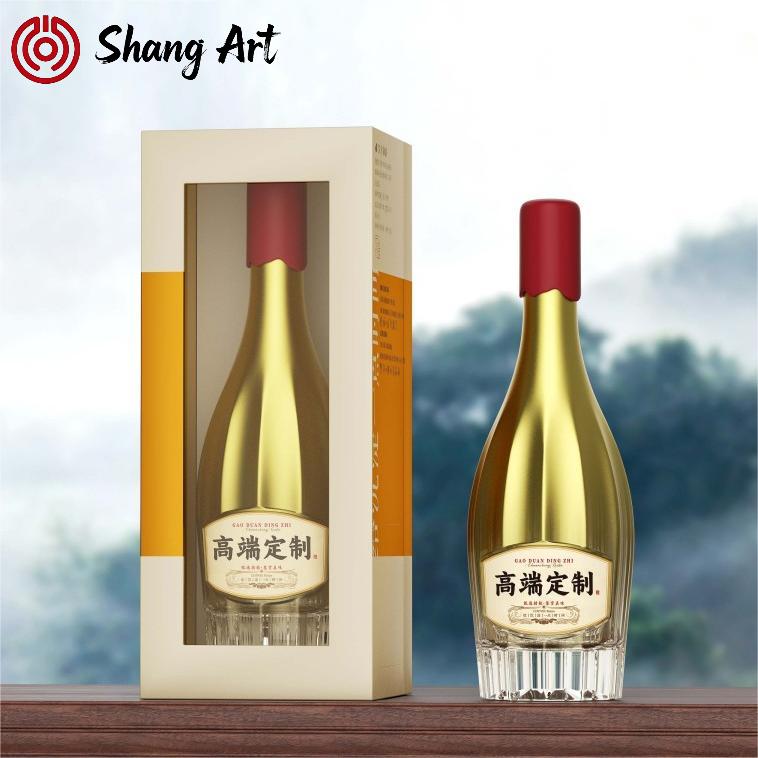
The decoration on a spirits bottle has to do more than look attractive in a rendering. It must fit the glass surface, reproduce the artwork clearly, survive packing and handling, and support the way customers recognize the brand.
Screen printing, 烫金, and UV printing create different visual and practical results. The right choice depends on the artwork, bottle shape, color count, finish, production plan, and the tests required before approval.
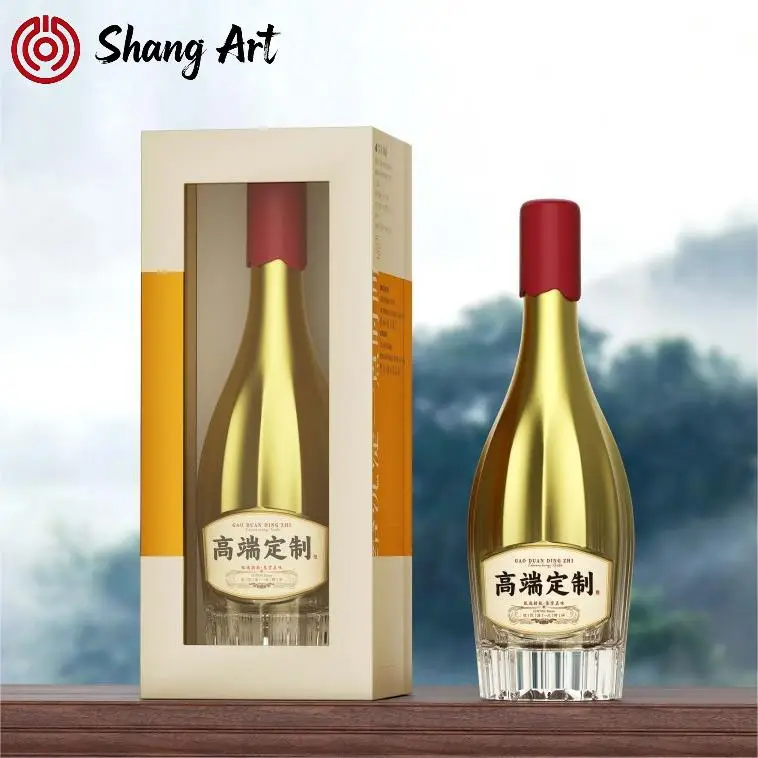
Quick Comparison of Bottle Decoration Methods
| Method | Best suited to | Design character | What to confirm on the sample |
|---|---|---|---|
| Screen printing | Solid colors, logos, text, direct-to-bottle graphics | Clean and integrated | Color, registration, adhesion, coverage on curves |
| Hot stamping | Metallic accents and premium highlights | Reflective and luxurious | Foil coverage, edges, alignment, abrasion resistance |
| 紫外线印刷 | Detailed, multicolor, or variable artwork | Vivid and flexible | Fine detail, color transitions, curing, surface compatibility |
Professional glass decorators may combine methods. Bormioli Luigi’s overview of spirits bottle decoration, 例如, lists screen printing, 烫金, lacquering, metallization, and component assembly as parts of a finished packaging program.
When Does Screen Printing Work Best?
Screen printing places ink directly onto the bottle through a prepared screen. It works well for brand marks, typography, borders, icons, and artwork built from defined color areas.
Brands often choose it when they want a smooth “no-label” presentation. It can be applied to clear or coated glass, but every color, curved surface, and registration point has to be planned around the bottle geometry.
Before approval, inspect:
- Color against the approved reference
- Logo position relative to the shoulder, base, and label panel
- Sharpness of small text and fine lines
- Coverage near curves or panel edges
- Adhesion after handling and packing
Square and flat bottles may provide broad decoration panels, while round bottles allow artwork to wrap around the body. Explore the available Shang Art glass bottle range before adapting the artwork.
When Should You Use Hot Stamping?
Hot stamping transfers a foil effect onto the decorated surface. Gold and silver are common choices, but other metallic colors can be considered when they fit the brand palette.
Use hot stamping to emphasize a crest, monogram, product name, border, neck detail, or limited-edition mark. It is usually most effective as a controlled accent rather than a substitute for every printed element.
The approved sample should be reviewed under different lighting because reflective foil changes as the bottle moves. Check complete transfer, clean edges, alignment with other graphics, and resistance to normal rubbing during packing.
When Is UV Printing the Better Option?
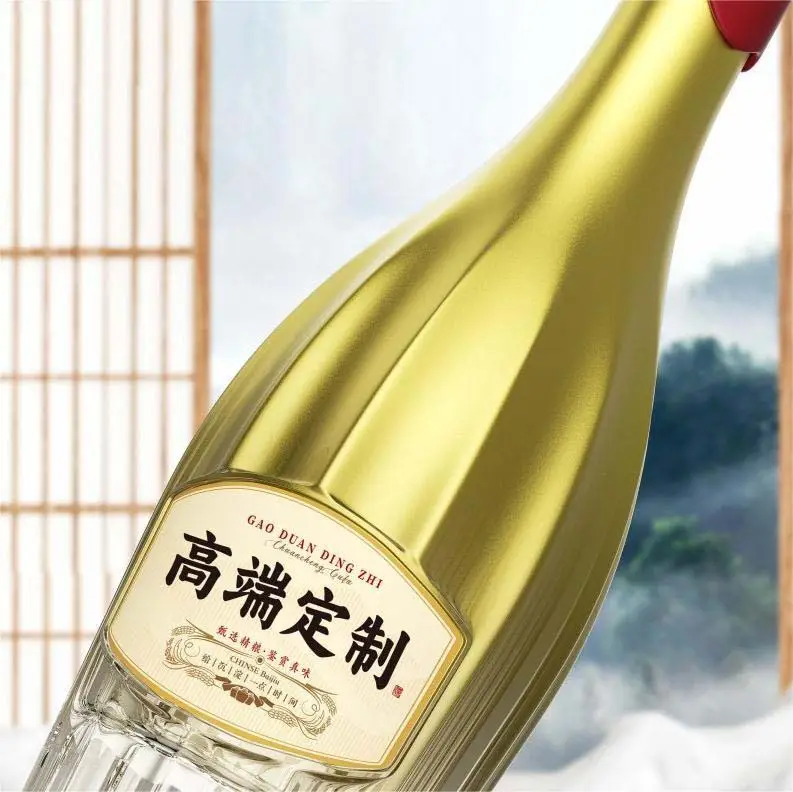
UV printing can reproduce detailed and multicolor graphics that may be difficult to build from a small number of solid screen-printed colors. It can be useful for gradients, illustrations, short-run variations, and artwork with fine detail.
The glass surface and any underlying coating must be compatible with the ink and curing process. A visually accurate digital file is not enough: the physical sample must confirm color, adhesion, texture, and how the image follows the bottle shape.
How Do Frosting and Coating Change the Result?
Frosting softens transparency and gives glass a diffused appearance. Color coating can create a solid, translucent, gradient, 哑光的, or glossy finish. These surface treatments can become the base layer for printed or stamped artwork.
A coating affects how every later color appears, so the complete decoration stack should be sampled together. 例如, a white logo on clear glass will not look identical on a dark matte coating.
Models such as the G18 SUN luxury glass bottle show how bottle silhouette, 颜色, 关闭, and decorative details work together to create a premium presentation.
Direct Decoration or an Applied Label?
Direct decoration creates an integrated bottle surface. An applied label provides flexibility when legal text, language, batch information, or regional artwork changes frequently.
Some brands combine them: a permanent printed logo establishes the core identity, while a label carries product-specific or market-specific information. The decision should consider filling, labeling equipment, moisture exposure, 贮存, and recycling requirements.
Prepare Artwork That Can Be Manufactured
Send vector artwork whenever possible and identify:
- Exact colors or approved physical references
- Minimum line width and text size
- Print position and dimensions
- Whether artwork wraps around the bottle
- Required metallic, 哑光的, gloss, or translucent effects
- Legal information that must remain legible
Ask for flat artwork, a 3D bottle view, and a physical sample. Review them in that order so obvious layout issues can be corrected before physical decoration begins.
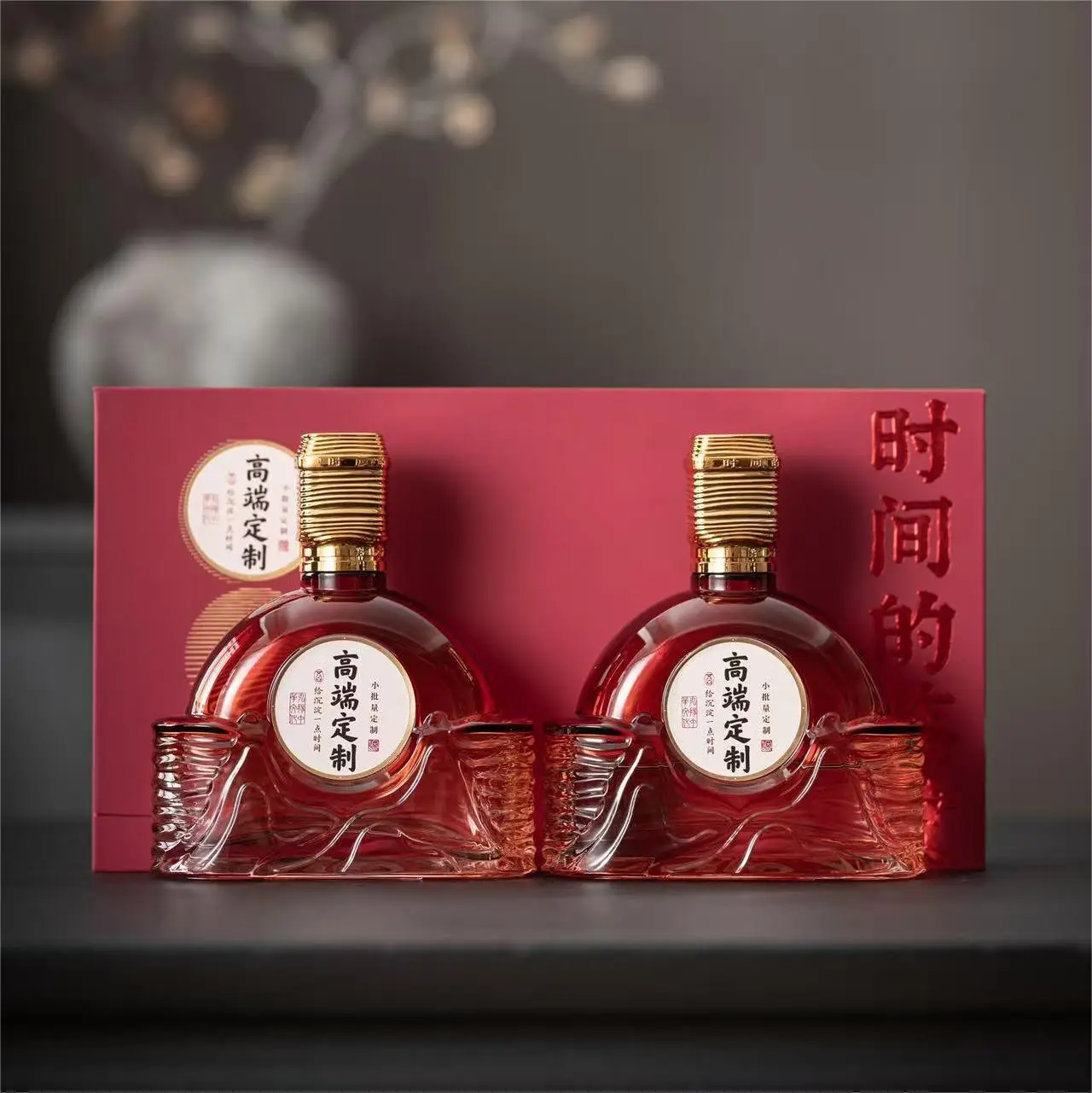
Build Decoration Into the Full Bottle Project
Decoration should be coordinated with the bottle mold, 玻璃颜色, 关闭, 礼品盒, carton dividers, and filling process. A raised emblem may affect packing clearance. A full-body coating may change tolerances. A printed registration point may need a stable bottle orientation on the decoration line.
The custom alcohol bottle service brings these elements into one development process. If you are still comparing bottle shapes, review custom glass alcohol bottle options before locking the decoration area.
Send Shang Art your bottle reference, 艺术品, target colors, 数量, 关闭, and packaging requirements. To discuss samples and a decoration plan, contact the Shang Art team 发送电子邮件至 market@shang-art.com 或 WhatsApp +86 13939051903.
Decoration should be developed with the bottle rather than added after geometry is fixed. Saverglass’s custom bottle development guide connects shape, 玻璃颜色, 压花, 雕刻, screen printing, hot foil, and coating with technical feasibility and sampling.
常见问题解答
Can screen printing and hot stamping be combined?
They can be combined when the materials, curing sequence, registration, and artwork are developed together. The final physical sample should confirm the result.
Which method is best for a multicolor illustration?
UV printing or an applied label may provide greater flexibility for detailed multicolor artwork. The best route depends on the bottle surface, 数量, durability requirements, and desired appearance.
Why is a decorated sample necessary?
A sample reveals color, scale, alignment, adhesion, reflectivity, and curved-surface behavior that cannot be judged reliably from a flat file alone.