
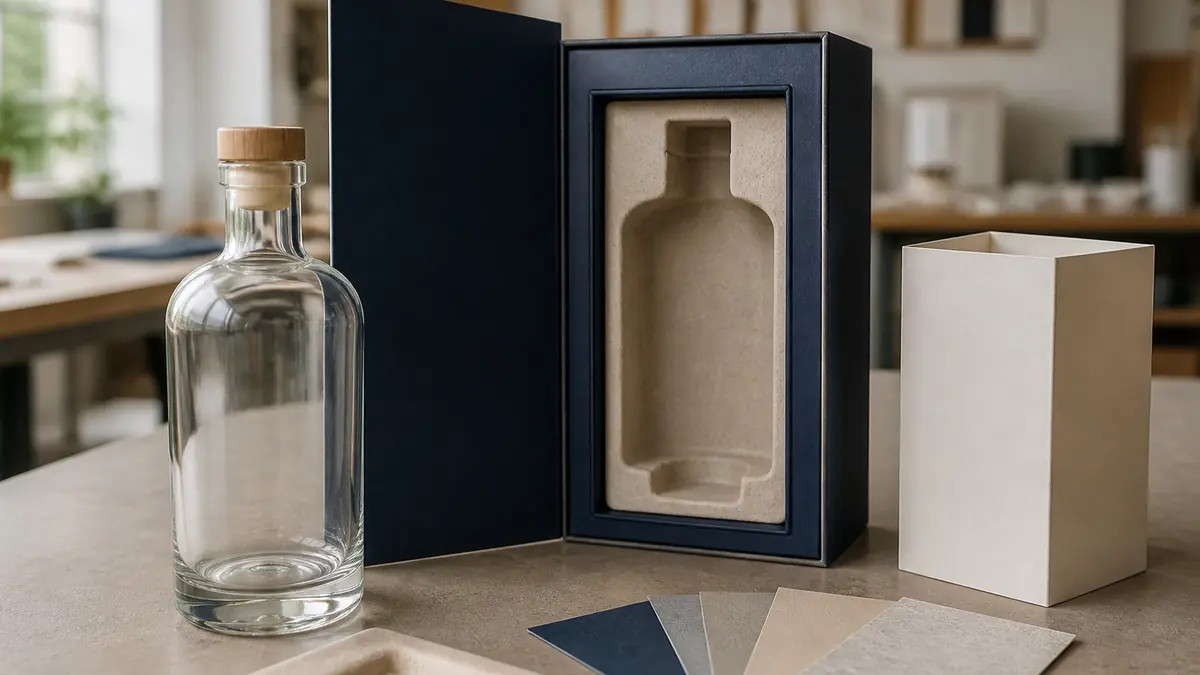
The right whiskey gift box is chosen from the finished bottle outward. Confirm the bottle’s maximum dimensions, filled weight, 关闭, 装饰, sales channel, and shipping route before selecting the box structure or insert. The insert should control movement without damaging the bottle’s finish, while the box should create an opening sequence appropriate to the product. A presentation box should not be treated as a shipping carton unless the complete packed system has been designed and tested for that distribution route.
This guide explains how buyers can turn those requirements into a practical bottle-and-box brief, compare common structures, review samples, and avoid discovering fit or transit problems after production begins.
Which whiskey gift box structure fits the project?
There is no single best structure. The right choice depends on the bottle, order volume, assembly method, display expectations, distribution channel, and desired balance between presentation and material use.
| Structure | Where it can fit | Points to confirm |
|---|---|---|
| Folding carton | Retail packs that need a lighter, space-efficient format | Board stiffness, bottom construction, bottle retention, print protection, and whether a separate insert is required |
| Rigid paperboard setup box | Premium gifting and launches where opening feel and presentation are important | Filled-bottle weight, closure clearance, hinge or lid behavior, insert access, and storage volume |
| Corrugated presentation box | Projects that need a more structural paper-based format or a presentation pack closer to the transport system | Flute and liner selection, print method, exposed edges, insert integration, and actual distribution testing |
| Bottle-and-accessory gift set | Programs combining a bottle with glasses, a pourer, booklet, or other item | Separate retention zones, accessory movement, weight distribution, removal sequence, and final packed dimensions |
A concept can also combine structures—for example, a rigid presentation box inside a corrugated outer case. That does not make the presentation box redundant: each layer has a different job. The inner pack supports brand presentation and product organization; the transport system manages warehouse and delivery hazards.
Start with the finished bottle specification
Do not design the box around a nominal bottle capacity or an early rendering. The packaging supplier needs the finished bottle envelope: maximum height, width, depth, and the location of the widest or most fragile features. The GS1 Package and Product Measurement Standard provides a consistent framework for measuring packaged products. For a gift-box project, the practical brief should also include the filled unit weight and every component that changes the envelope.
- 关闭: record the assembled height and maximum diameter, including a decorative overcap or tamper-evident component.
- Decoration: identify screen printing, 标签, coatings, transfers, metal badges, or textured areas that should not rub against the insert.
- Bottle geometry: mark shoulders, corners, embossed details, heavy bases, and other contact-sensitive zones.
- Production variation: agree which approved tolerances the pack must accommodate instead of fitting one hand-selected sample only.
- Packing condition: state whether bottles enter the box empty or filled, and whether packing is manual or automated.
For a new bottle, coordinate the pack after the bottle, 关闭, and decoration direction are sufficiently defined. 尚艺术 custom alcohol bottle workflow covers concept, bottle structure, 装饰, closure matching, 采样, and production planning. Buyers can also compare glass liquor bottle options before fixing the gift-box footprint.
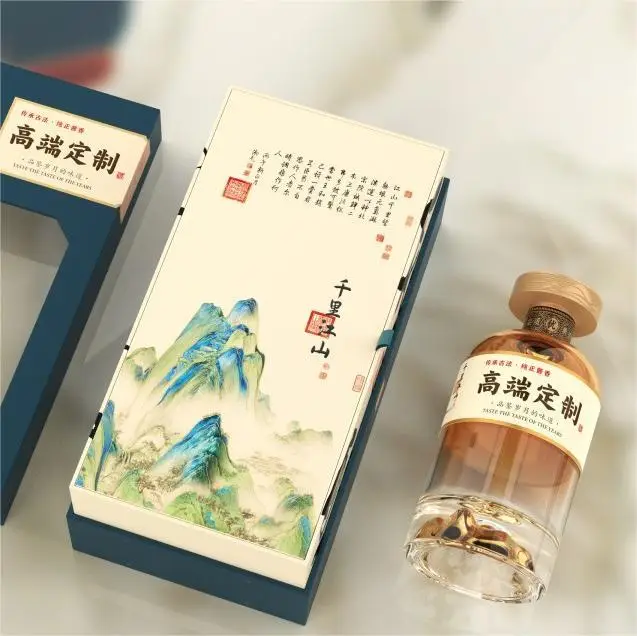
The image above shows why the bottle and presentation pack should be reviewed together: silhouette, closure height, label position, box graphics, and opening direction all contribute to the same shelf and gifting experience. More views are available on the G15 Mountain Glass Bottle page.
Choose the insert by support zones and surface sensitivity
An insert should locate the bottle, support its weight, protect vulnerable decoration, and let the recipient remove it without an awkward struggle. Material names alone do not prove performance. Start by mapping where the insert may touch the bottle and where it must not.
Paperboard and corrugated inserts
Folded paperboard and corrugated structures can create neck supports, base platforms, side rails, and accessory compartments. They can be a good fit when the project favors paper-based components and efficient flat or nested supply. Their success depends on structural geometry, board selection, fold accuracy, assembly, and the complete packed test—not simply on calling the insert “paper.” Exposed cut edges and concentrated contact points should be checked against labels, coatings, and decorated glass.
Molded-fiber inserts
Molded fiber can form shaped cavities and distribute contact across selected areas. Buyers should review draft angles, texture, visible edges, dust, color consistency, nesting, and removal force. A rough or poorly positioned surface may be unsuitable beside a delicate finish, so decorated bottle samples should be used during approval.
Foam or textile-lined inserts
Foam can provide close-fitting cavities and a soft presentation, while textile or paper wraps can change the tactile and visual result. The complete construction matters: base material, surface covering, adhesive, cut quality, odor, aging, recovery, local disposal route, and interaction with bottle decoration should all be reviewed. Avoid selecting a density or thickness from a generic online table without a validated design and test plan.
If the project has a material-reduction or recycling goal, assess the whole pack in its destination market. Mixed materials, magnets, laminates, fabric, and permanent adhesives can affect separation. A simpler structure that uses less material may be preferable when it still protects the product and meets the presentation brief.
Design the unboxing sequence, not just the closed box
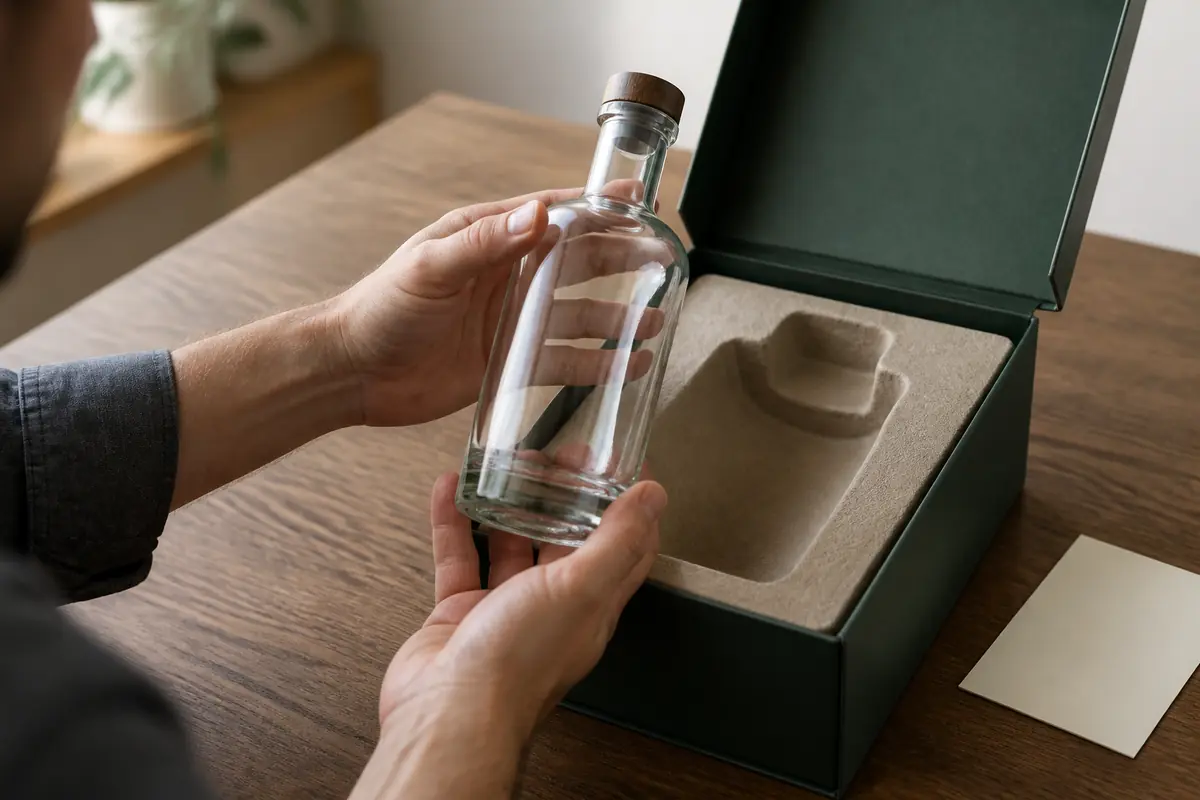
A whiskey gift box is experienced in stages: the buyer sees it on a shelf or in a delivery carton, opens the lid, reads the bottle orientation, grips the bottle, removes it, and may return it to the pack. Review each stage with a representative sample.
- Can the lid be opened without the bottle or accessories shifting?
- Is the label or principal decorated face visible immediately?
- Is there enough finger access to support the bottle safely at its base or body?
- Does removal avoid pulling on the closure alone?
- Can printed instructions or a booklet be seen without blocking the bottle?
- Will a returned bottle sit in the intended orientation?
Closure selection can change the required headspace and the way a recipient grips the bottle. Coordinate the final bottle cap or stopper with the insert and lid before approving the pack. For bottles with unusual proportions or heavy glass distribution, the related guide to liquor decanter shape, weight, and closures explains the bottle-side decisions that affect packaging.
Apply decoration after the structure is credible
Foil, 压花, debossing, specialty paper, printed graphics, spot coatings, 标签, pulls, and closures can strengthen the presentation, but they should not conceal an unresolved structural problem. First approve the opening method, load path, bottle retention, and insert access. Then place decoration on surfaces that remain visible and stable during manufacture, packing, 贮存, and handling.
Ask for artwork dielines only after the structure and dimensions are controlled. Review registration around edges and folds, small reversed text, barcode contrast and quiet zones, foil near scores, rub-sensitive dark colors, and any graphic that must align with the bottle inside. Physical color and finish samples are more reliable than judging metallic or tactile effects from a screen.
Separate presentation approval from shipping approval
A gift box can look flawless on a review table and still be unsuitable for parcel delivery. Define whether the unit will travel in a master case, an individual shipping carton, or another protective system. The test plan should represent the actual filled bottle, insert, 礼品盒, outer packaging, 关闭, and distribution route.
The ISTA Procedure 3A overview describes a general simulation for parcel-delivery systems and shows why package type and liquid-product risks matter. It is a useful planning reference, but the appropriate protocol and acceptance criteria must be agreed for the specific route and project. Passing an unrelated or incomplete test does not establish that every configuration is ready for shipment.
After testing, inspect more than obvious glass breakage. Check closure retention and leakage, label scuffing, printed-surface rub, insert collapse, lid opening, accessory movement, corner damage, and whether the unboxing sequence still works. Record the exact sample construction and packing method so the approved result can be reproduced.
Use staged samples to control changes
A sensible approval process moves from inexpensive questions to production-representative evidence:
- Requirement brief: confirm bottle data, channel, route, target presentation, accessory list, packing location, and market constraints.
- Structural prototype: evaluate fit, support zones, finger access, opening, orientation, and assembly before premium decoration is added.
- Decorated sample: review materials, graphics, finish, 颜色, odor, scuffing, and interaction with the approved bottle decoration.
- Packing trial: confirm that operators can assemble the box and load the bottle consistently at the intended rate.
- Distribution test sample: test the complete, recorded pack configuration for the intended route and examine the product and presentation afterward.
- Golden sample and specification: retain an approved physical reference and signed documentation for bottle orientation, insert, materials, 艺术品, packing, and acceptance points.
If the bottle changes after box approval—even a closure height, base weight, coating, label edge, or decorative badge—review the affected fit and tests again. Small bottle changes can alter contact, balance, headspace, and removal.
What should a whiskey gift box brief include?
Send the bottle supplier or packaging team a concise, measurable brief rather than a mood board alone:
- finished bottle drawing and representative samples;
- filled weight, closure system, and decoration specification;
- quantity and planned launch timing;
- sales channel, destination markets, and distribution route;
- box type preferences and opening experience;
- accessories, booklets, or secondary items;
- material, recycling, 标签, and retailer requirements;
- packing location and manual or automated assembly needs;
- sample stages, test plan, and approval responsibilities.
For a coordinated bottle-and-box project, 联系尚艺术 with the bottle drawing or sample, filled weight, 关闭, decoration direction, 数量, destination, distribution route, and preferred opening style. The team can review the bottle customization and presentation-pack requirements together and identify which details must be confirmed before quotation and sampling.