

A wax-sealed liquor bottle should be designed as a complete opening system, not as a bottle with wax added at the end. The cap or stopper remains the primary closure; the wax adds visual identity and an opening ritual. Bottle-neck compatibility, wax coverage, tear-strip access, line handling, and transport conditions all need to be approved together.
An alcohol bottle with red wax can become instantly recognizable, but color alone does not make the package reliable. The best result opens cleanly, keeps wax fragments away from the pour path, protects the underlying closure, and arrives without cracking, scuffing, softening, or sticking to the pack.
What does bottle sealing wax actually do?
Modern bottle-dipping wax is primarily a decorative layer around the neck and closure. It can create a handcrafted appearance, carry a signature brand color, cover the transition between the bottle and cap, and make first opening feel more deliberate.
Wax should not be expected to correct a leaking stopper, an incompatible neck finish, poor closure application, or an unsuitable liner. The liquid seal is created by the specified primary closure system. Depending on the market and package, a separate tamper-evident feature may also be required. Decorative wax may contribute visible evidence of opening, but a brand should not assume that any wax application automatically meets a legal requirement.
The waxed neck is a four-part system
A useful way to develop the package is to separate it into four connected parts:
- Bottle neck finish: the glass dimensions and geometry that receive the stopper, cap, or overcap.
- Primary closure: the bar-top stopper, screw closure, pilfer-proof cap, or other specified component that seals the product.
- Opening aid: a tear strip, pull tab, score line, or supplier-approved method that lets the consumer access the closure safely.
- Decorative wax: the material, couleur, coverage, thickness, edge shape, and surface effect visible on the finished bottle.
A change to one part can affect the others. A wider closure head changes wax coverage. A taller finish changes the dip depth. A heavily textured cap may alter adhesion and edge definition. A tear strip placed too close to a shoulder or collar may be difficult to grasp. Final dimensions should therefore come from the selected bottle, closure, and wax suppliers rather than from a rendering.
Choose the primary closure before the wax style
Bar-top stoppers are common on premium spirits because the consumer can usually remove and replace them by hand. The head can be wood, métal, ceramic, glass-like material, or a molded component, while the leg may use cork, micro-agglomerate, or a synthetic material. Screw and pilfer-proof closures follow a different neck geometry and opening motion.
Each closure needs a compatible neck finish, insertion or application process, sealing specification, and extraction or opening requirement. Wax must be developed around that proven combination. It should not interfere with closure seating, hide a problem during inspection, or create an uncontrolled load when the consumer opens the bottle.
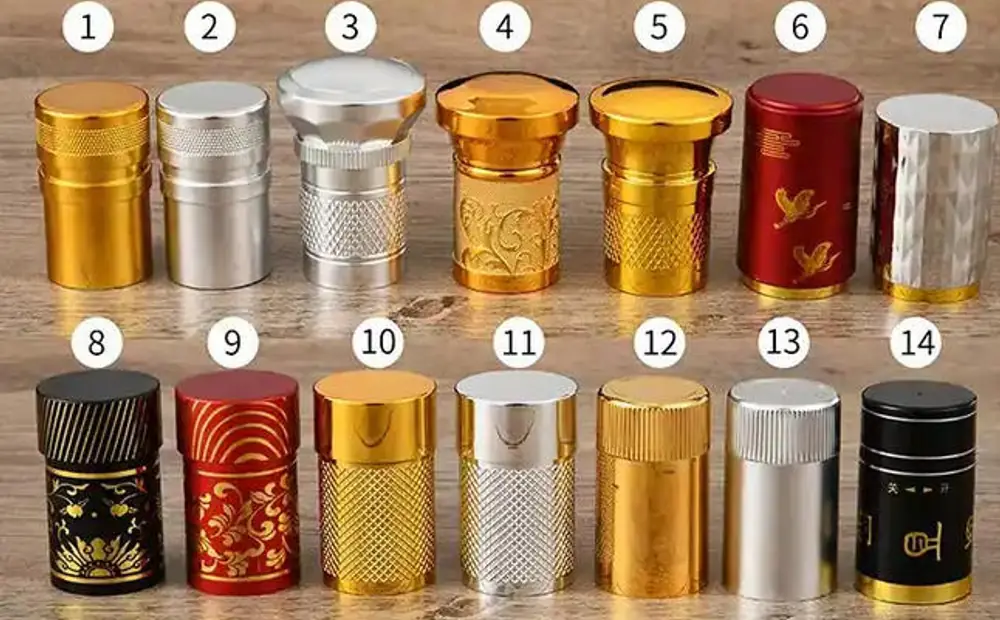
Shang Art’s alcohol bottle cap options show how strongly the closure changes the appearance of the neck. Select the bottle and closure as an engineered pair before deciding how much of either component the wax should cover.
Four common wax design directions
Clean neck dip
A controlled dip creates a defined lower edge around the neck. It suits brands that want consistent shelf presentation and a clear area for a tear tab. The approval sample should define dip depth, edge shape, rotation, and acceptable variation around the circumference.
Controlled drip
A drip effect feels more handcrafted and can make each bottle look slightly different. The challenge is deciding how much variation is intentional. Long or uneven drips can interfere with labels, collect scuffs, change carton contact points, or look accidental. Keep the lowest permitted drip away from critical artwork and handling areas.
Cap-style coverage
A smooth wax capsule can cover the closure and upper neck with a more formal silhouette. It needs an obvious opening path so the consumer does not have to guess where to cut or pull. The wax surface should also be checked for fingerprints, dents, and abrasion after packing.
Small medallion or side seal
A stamped wax medallion can add heritage character without dipping the complete closure. It may be easier to keep away from the pour opening, but adhesion, stamp definition, location, and resistance to accidental detachment still need to be validated.
Design the opening experience before production
The first opening should be understandable without requiring a knife or excessive force. A visible tear tab can guide the consumer and create a clean separation line. Its material, width, position, tab length, and pull direction should be sampled with the final wax and closure.
Observe what happens after the strip is pulled. Check whether the wax releases in a controlled section, whether loose fragments remain near the bottle mouth, whether the closure can be gripped, and whether the bottle can be resealed as intended. Test with people who have not seen the development process; an opening method that is obvious to the design team may not be obvious to a customer.
The existing guide to production-ready liquor bottle design provides a broader framework for evaluating the closure, decoration, label, and pack as one package rather than approving isolated components.
Wax application needs process control
Wax behavior changes with formulation, working temperature, bottle and closure surface, dip time, immersion depth, removal motion, cooling method, and the number of dips. Those settings are supplier- and project-specific. A temperature or timing value published for one wax should not be transferred to another material without confirmation.
For hand application, define how bottles are held, immersed, rotated, cooled, and inspected. For semi-automatic or automated application, confirm bottle orientation, line speed, neck clearance, wax level control, heating controls, ventilation, safe working procedures, and changeover requirements. The process should produce the approved appearance without heating or contaminating closure components beyond their specified conditions.
Color should be approved on a physical wax sample and then on the actual bottle. Gloss, thickness, lighting, and the color underneath can make red, burgundy, metallic, or pearlescent wax look different from a digital color value.
Shipping risks are more than broken glass
A wax finish can change during storage and transport even when the bottle remains intact. Relevant hazards include heat, cold, temperature cycling, carton compression, vibration, repeated contact with dividers, and abrasion against adjacent components.
- Heat: may soften or mark an unsuitable formulation, especially where the wax contacts a divider or another bottle.
- Cold: may reveal brittleness or cracking in a formulation that looked acceptable at room temperature.
- Vibration and abrasion: can create scuffs, powder, chips, or transfer at high contact points.
- Compression: can press waxed closures against an insert, couvercle, or top pad.
- Pack orientation: can shift which part of the wax carries a load during handling.
Map the real route from decorating and filling through warehouse storage, pallet transport, distribution, retail, and parcel delivery if applicable. Then select conditioning and package tests with the responsible packaging laboratory. Avoid relying on a room-temperature shelf sample as proof of shipping performance.
Check destination-market closure requirements
Regulations differ by market. In the United States, Par exemple, le TTB guidance on closures for distilled spirits bottles states that distilled spirits plants and importers must securely affix a tamper-evident closure or similar device. A decorative wax concept should therefore be reviewed with the specified closure and the responsible compliance partner rather than treated as a universal compliance solution.
For every destination, confirm the applicable rules for the closure, tamper evidence, labeling visibility, materials, and any required approvals. If the wax overlaps mandatory information or makes a closure feature difficult to inspect, revise the coverage before production.
What should be approved on the final sample?
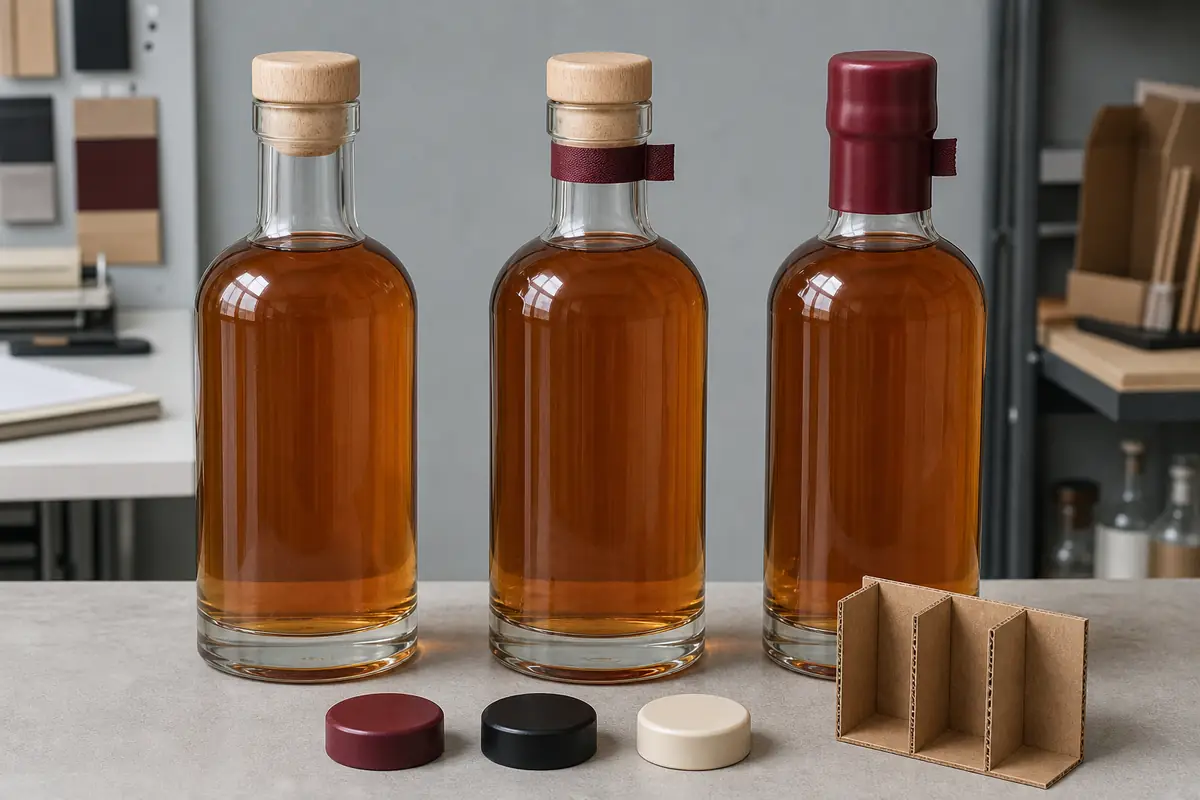
- Closure fit and seal: confirm the neck finish, closure specification, application, seating, and project-specific seal checks before waxing.
- Wax identity: record the approved formulation, supplier, color reference, finish, coverage, and sample.
- Appearance: inspect edge shape, drip range, thickness, gloss, bubbles, dents, contamination, and bottle-to-bottle variation.
- Opening: verify tear-strip access, pull direction, required force, fragment control, closure grip, and resealing experience.
- Decoration clearance: check the wax against neck printing, étiquettes, foils, embossing, collars, and mandatory information.
- Line compatibility: identify contact with guides, grippers, conveyors, closure equipment, inspection systems, and pack stations.
- Transport pack: examine divider height, top clearance, bottle spacing, abrasion points, orientation, and any gift-box insert.
- Conditioning and distribution: agree on temperature, vibration, compression, drop, and other tests that represent the intended route.
- Production reference: retain a signed approved bottle with the closure, wax, artwork, packaging, and acceptance criteria.
Final recommendation
Use wax when the opening ritual and neck silhouette add meaningful brand value. Begin with a compatible bottle and primary closure, choose a wax style that has a clear opening path, and test the fully packed product under realistic distribution conditions. A successful wax finish is not only attractive in a photograph; it remains controlled from the decorating line to the customer’s first pour.
The wax layer does not replace a technically compatible stopper. Le AWRI’s cylindrical-closure guidance illustrates how stopper dimensions, neck geometry, insertion, recovery, and post-packaging checks affect the primary seal.
To develop a wax-sealed spirits package, review Shang Art’s glass bottle range et custom bottle process. Then send the capacity, estimated quantity, target market, bottle shape, closure type, wax concept, artwork, filling route, and packing requirements through the project inquiry page so the bottle, closure, wax, and sample plan can be evaluated together before commercial terms are confirmed.