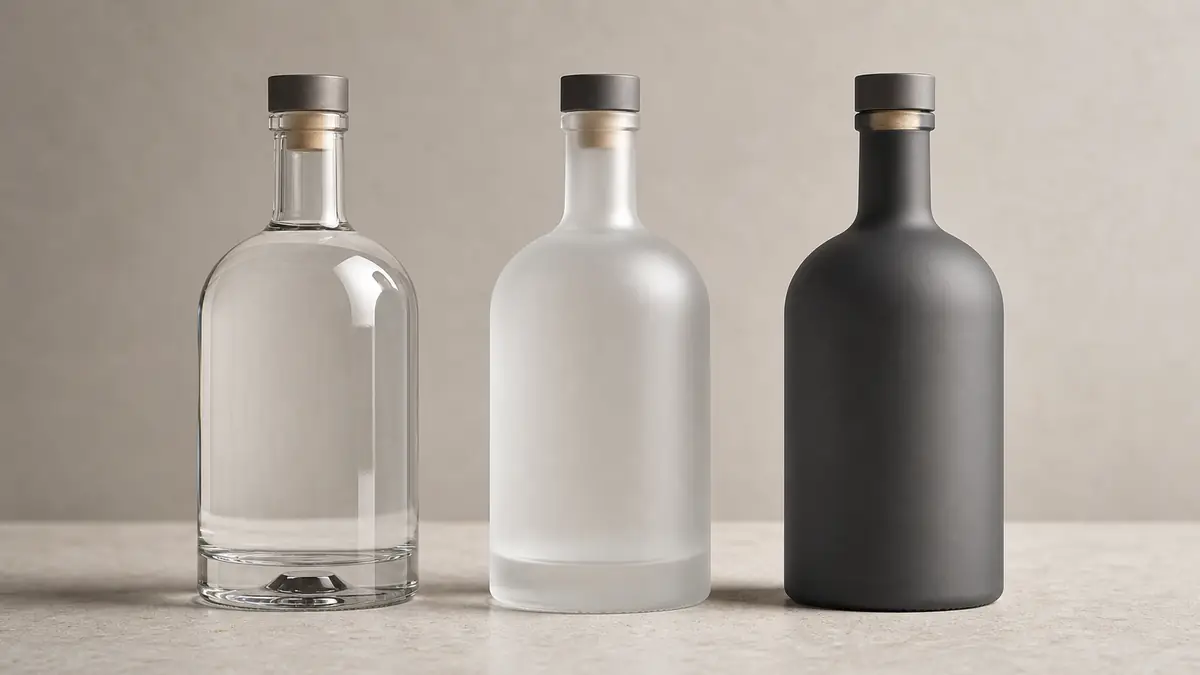
A frosted liquor bottle is usually the right choice when a brand wants a soft, translucent surface and reduced glare without hiding the bottle form. Choose a matte or translucent coating when color flexibility is more important, and choose clear glass when showing the liquid and keeping the surface visually simple are the priorities.
The three options can look similar in a rendering, but they are not the same construction. Their artwork, 处理, sample approval, and production questions differ. This comparison helps spirits brands choose the finish that fits the complete package rather than selecting only by appearance.
Frosted vs. coated vs. clear glass at a glance
| Decision factor | Frosted glass | Matte or translucent coating | 透明玻璃 |
|---|---|---|---|
| How the look is created | The glass surface is treated to create a diffused, satin appearance | An exterior decorative layer is applied after the bottle is formed | The glass remains visually transparent without an all-over decorative finish |
| Liquid visibility | Diffused; a reserved clear window can restore a selected view | Depends on whether the coating is transparent, translucent, or opaque | Highest visibility of liquid color and fill presentation |
| Color freedom | Usually centered on a neutral satin effect unless combined with other decoration | Broad choice of colors, gradients, opacity, matte, gloss, and special effects | Color comes mainly from the glass, liquid, label, printing, 关闭, and accessories |
| Tactile character | Soft-looking, diffused surface; the exact feel depends on the frosting process | Can range from smooth matte to other supplier-specific tactile effects | Clean, smooth glass feel with visible reflections |
| Main approval risk | Uneven appearance, reserved-window edges, and interaction with later decoration | Color consistency, adhesion, rub points, and compatibility with labels or printing | Reflections, visible contents, 艺术品对比, and the visibility of normal glass variation |
| Best starting use | Brands seeking a restrained translucent finish with a tactile visual identity | Brands that need a controlled brand color or a more dramatic full-surface effect | Brands that want the spirit color, clarity, and bottle geometry to remain visible |
These are starting points, not universal performance guarantees. The exact result depends on the source bottle, treatment specification, artwork system, 关闭, filling operation, and distribution conditions.
What is a frosted liquor bottle?
A genuinely frosted bottle has a treated glass surface that scatters light and creates a translucent matte appearance. Acid etching is one established industrial route; other suppliers may use different surface-treatment methods. Because “frosted” is also used loosely for matte-looking sprays, buyers should ask the decorator to identify the actual process rather than approving the description alone.
Frosting is useful when a brand wants to soften reflections while retaining a sense of glass and partial transparency. It can cover the full body or be limited to selected areas. A masked or reserved window can leave part of the bottle clear, allowing the liquid, an internal feature, or a back-side design to remain visible.
Frosted glass can also be combined with printing or hot stamping. The Ardagh Glass Packaging decoration overview distinguishes satin etching from coatings and shows how multiple decoration processes can be combined. The combination should be sampled as one finished system because artwork color, edge definition, registration, and visual contrast change on a diffused surface.
Choose frosting when
- a neutral translucent effect supports the brand better than a solid brand color;
- the bottle should feel visually softer while remaining recognizably glass;
- a clear reserved window is part of the design idea;
- the artwork can be planned around the treated surface and verified on a physical sample.
Reconsider frosting when
- the liquid must be seen with maximum clarity across most of the bottle;
- the project depends on exact full-body color matching rather than a neutral satin appearance;
- the decorator cannot clearly state the process, decoration sequence, or sample acceptance criteria;
- the project team is assuming that a frosted appearance automatically provides light protection or a specific level of durability without test evidence.
When is a matte coating the better choice?
A coating adds a decorative layer to the outside of the formed bottle. It can be transparent, translucent, or opaque and may be specified in matte, gloss, gradient, metallic, pearlescent, or other supplier-supported effects. This makes coating the more flexible route when color itself is a major brand asset.
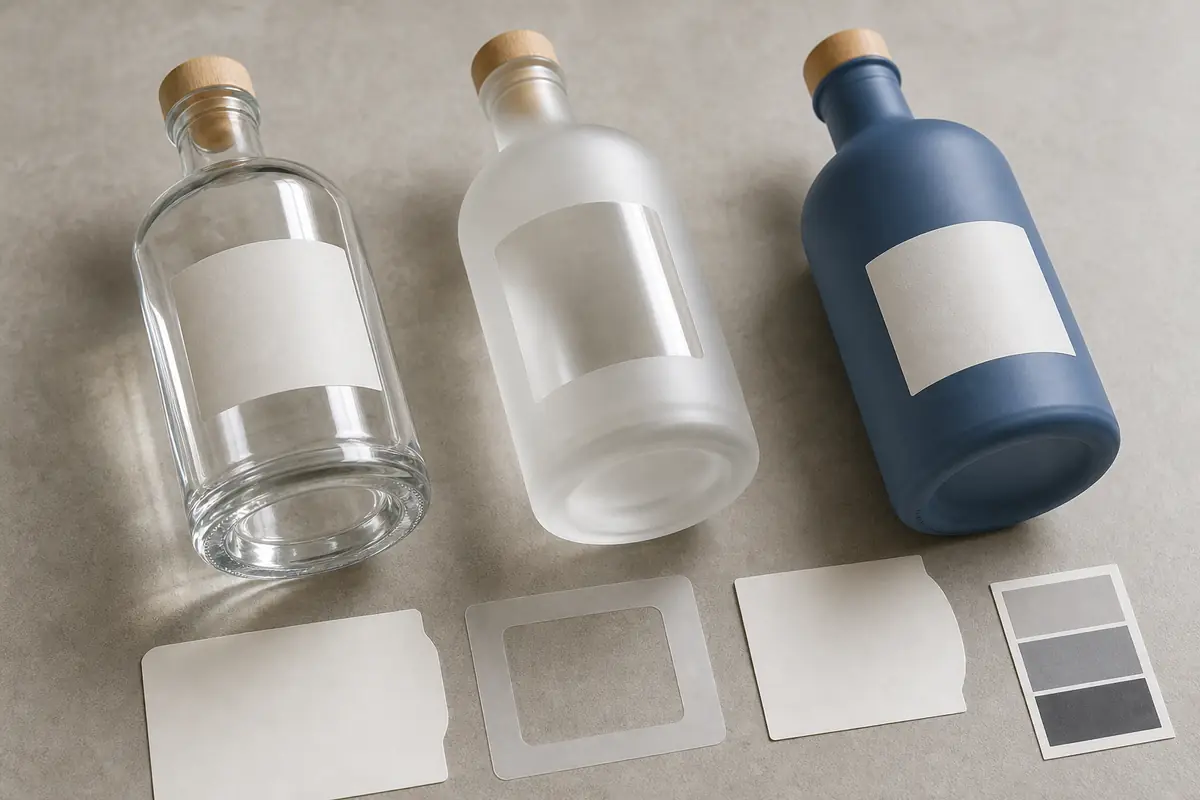
A simulated frost coating can resemble etched glass in photographs. The distinction matters because it affects how the finish is specified, how later artwork is applied, and which risks must be tested. Contact with line guides, closure equipment, dividers, cartons, or repeated handling may create project-specific rub points. Labels, inks, foils, and adhesives also need to be evaluated on the actual coated surface.
Choose coating when
- the package needs a particular color, gradient, opacity, or special visual effect;
- the brand wants the same bottle shape to support several color-coded products;
- the selected decorator can produce and control the required finish on the chosen geometry;
- the project includes suitable adhesion, 处理, filling-line, and packing trials.
Reconsider coating when
- the primary goal is an integral, neutral frosted-glass character rather than an applied color layer;
- the specification does not define opacity, gloss level, color reference, coverage, and permitted variation;
- the complete decoration stack has not been sampled;
- the transport pack allows decorated surfaces to rub against dividers, 关闭, or other bottles.
When should a spirits brand keep the glass clear?
Clear glass is not an unfinished fallback. It can be the strongest design choice when liquid color, clarity, suspended elements, or a clean bottle silhouette carries the visual story. Reflections and transparency can make structural details such as the shoulder, base, punt, 压花, or internal view more prominent.
Clear glass also gives the design team an honest baseline. Artwork contrast, fill presentation, closure color, and label opacity can be assessed without an all-over decorative layer changing the background. A model such as the G17 square transparent bottle shows how a clear body can combine a defined label area with visible glass geometry.
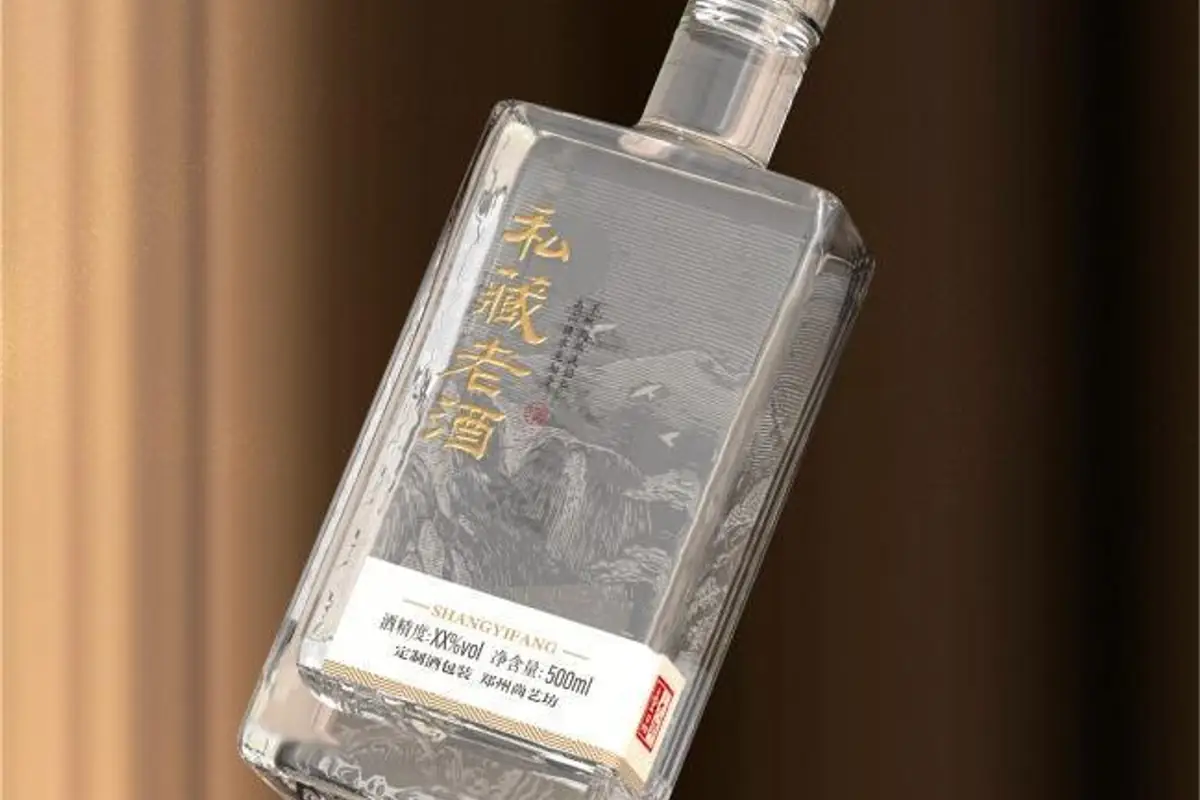
Clear glass still requires careful design. Highly transparent packaging exposes the relationship between the liquid, label, back printing, seams, glass distribution, and every visible component. Bright environments may also create reflections that change how the artwork photographs or reads on a shelf.
Choose clear glass when
- the liquid appearance is an important part of product recognition;
- the brand direction depends on clarity, brightness, or visible bottle structure;
- 标签, direct printing, 压花, or the closure provide sufficient differentiation;
- the team wants to begin with a clear reference before comparing surface treatments.
Choose the finish by the brand task
If the main task is to soften the bottle while preserving translucency, start with a true frosted-glass sample. Ask whether the proposed result is full or partial and whether a clear window is feasible.
If the main task is to control the package color, start with coating samples. Specify the color reference, opacity, gloss or matte level, full or partial coverage, and any gradient. Review the result under the lighting used for approval.
If the main task is to display the spirit, begin with clear glass. Build differentiation through bottle shape, 关闭, label, direct print, 压花, and secondary packaging before deciding whether an all-over finish adds useful value.
If the team is uncertain, compare the same bottle geometry in all three directions. Keeping the shape, 关闭, artwork size, and lighting consistent makes the finish easier to judge. Shang Art’s glass bottle range can be used to identify a suitable base shape before testing the surface direction.
How finish decisions affect artwork and labels
The background beneath artwork changes the perceived color and contrast. White printing on clear glass, frosted glass, and a dark coating will not produce the same visual result. Metallic foil can also appear different beside a soft satin surface than beside high-gloss clear glass.
For direct decoration, confirm the printable area, curvature, registration limits, minimum line detail, color system, curing sequence, and whether the bottle receives frosting or coating before printing. For pressure-sensitive labels, test the selected label stock and adhesive on the real finished surface. A paper mockup placed on a rendering cannot prove adhesion, edge lift, opacity, or application performance.
Reserved clear windows need their own dimensional control. Review the boundary between clear and treated areas, its relationship to the label or print, and what becomes visible through the window when the bottle is filled.
What should be checked on the physical sample?
- Overall appearance: inspect uniformity, color, opacity, gloss, texture, and the relationship between the body, shoulder, neck, and base.
- Clear windows and boundaries: check position, edge definition, symmetry, and alignment with artwork.
- Decoration compatibility: review print clarity, foil registration, label appearance, and color contrast on the actual finish.
- Closure and filling interfaces: identify contact points and confirm that the finish does not interfere with the bottle neck, closure application, or equipment used for the intended project.
- Handling and pack contact: examine likely touch and rub areas in trays, dividers, gift boxes, cartons, and normal distribution handling.
- Project-specific exposure: agree on any wet, condensation, temperature, abrasion, alcohol-contact, or other tests required for the intended use.
- Approval reference: retain an approved sample with the finish specification, artwork version, color reference, and acceptance criteria for production comparison.
The appropriate tests and acceptance limits vary by process and project. They should be agreed with the bottle producer, decorator, filler, packaging supplier, and any responsible testing or compliance partner.
Final recommendation
Choose frosted glass for a restrained translucent surface, coating for greater color and effect flexibility, and clear glass when the spirit and bottle structure should remain fully visible. The decision should be made with the real artwork, 关闭, label, filling route, and transport pack—not from an isolated digital rendering.
If a frosted or coated bottle will carry an applied label, 这 HERMA guide to wrap-around labeling highlights alignment, spiral offset, registration, throughput, and format changeover as practical application factors.
To compare options for a new spirits package, review Shang Art’s bottle customization process, then send the preferred capacity, 数量, bottle shape, target market, 艺术品, 关闭, finish direction, and packing requirements through the project inquiry page. The team can prepare a suitable bottle and finish comparison for sample approval before production terms are confirmed.